The Joy of Hello, World!
The cursor blinked expectantly...compile...run and with a single press of the "Enter" key, it happened—there it was on the screen, "Hello, World!" in plain, glorious text. The thrill you felt was electric. But you were just following the tutorial right, this made total sense. So, you add a few exclamation marks in the source code. Compile...run…and there it was — “Hello, World!!!” — the computer was following your instructions. .

- Stijn de KoningIT Lead Data Science
For many of us, our journey into the world of programming began with this simple Hello, World!!!. In that instant, the possibilities felt limitless. It felt like you gained a new superpower. The world was at your fingertips, and you could be the creator of something entirely new.
But as we’ve grown in our craft, so has the complexity of our field. That early sense of freedom, of control, can sometimes feel distant. Why? Because what was once a single program now involves countless moving parts, tools and perspectives to bring it to life.
This article explores how Rabobank reclaims the autonomy and thrill of those early days through the modern full-stack engineer, combining technical breadth, depth, and ownership to shape entire solutions.
What if AI could transform banking as we know it?
Join our Generative AI teamThe rise of complexity in D&A products
In the early days, coding often felt straightforward. You wrote something, ran it and saw the results almost instantly. But as software development expanded into new domains — first web, mobile, backend, frontend, security, and later things like microservices, big data, data science and machine learning — building these applications required larger teams and more specialized roles.
Data engineers focus on data pipelines, software engineers handle backend systems, data scientists find new ways to get value out of data, frontend engineers craft user interfaces, DevOps engineers manage CI/CD pipelines and infrastructure, and ML engineers ensure that AI models are properly deployed and monitored. Each of these disciplines adds depth and expertise, but they can also lead to silos that separate teams.
Imagine trying to build an interactive web app using AI-generated insights. First, a data engineer needs to create a data pipeline to make the data usable for the data scientist. The data scientist then extracts valuable insights, followed by a backend engineer creating an API to expose that data. The frontend engineer builds an interface for it, the DevOps engineer makes sure everything runs smoothly in the cloud and finally, the ML engineer monitors the AI components.
As every piece requires close collaboration, this interdependence can dilute the sense of ownership and autonomy that sparked our passion in the first place.
Today, the path to becoming a full-stack engineer has never been easier. "
A new type of full stack engineers
What if we could keep solving complex problems while reclaiming the autonomy that made “Hello, World!” so thrilling? At Rabobank, we’re embracing this vision through the modern full-stack engineer—a creator who combines technical breadth, depth and ownership to shape entire solutions.
This modern take on full-stack engineering is not just about mastering the entire stack. It’s about fostering a mindset of versatility and collaboration. These engineers bridge gaps between design, development, testing and deployment, taking end-to-end ownership while valuing the expertise of specialists. They take full responsibility for delivering value, they unlock faster innovation and a deeper connection to their work.
Today, the path to becoming a full-stack engineer has never been easier. Better tooling, the abundance of open-source projects, endless online tutorials and accessible cloud platforms provide the perfect environment for skill-building and exploration. But at Rabobank, we’ve taken it further.
We’ve developed several platforms that simplify the process of building new products and services. These tools are designed to remove complexity and enable engineers to focus on what matters most: delivering impactful solutions. Our platforms empower engineers to take true end-to-end ownership—whether it’s ideating, implementing, or optimizing solutions for scale.
GenAI is a cornerstone of this evolution. It transforms the engineering process by accelerating creativity, automating repetitive tasks, ensuring quality and enhancing problem-solving. From idea generation to deployment, GenAI helps engineers work smarter, faster and with greater confidence.
Our transition to cross-functional teams strengthens this approach. By embedding all necessary capabilities into a single group, we empower engineers and data scientists to contribute at every level, fostering autonomy and innovation.
Balancing specialization and autonomy
Becoming a full-stack engineer doesn’t mean abandoning deep expertise; it means enriching it with a broader understanding of the systems around you. It’s driven by curiosity—exploring parts of the stack you’ve never touched—and a desire for greater autonomy. Equally important, it’s about creating a collaborative culture where team members share knowledge, learn from one another and collectively grow stronger.
Specialization remains critical. The depth of knowledge specialists bring is invaluable to solving complex problems. However, at Rabobank, we encourage both engineers and data scientists to expand their foundational skills. This enables them to actively participate across the entire product lifecycle. By blending deep expertise with broader capabilities, teams become more resilient, innovative and effective.
Our end-to-end full-stack teams break down traditional silos, replacing rigid roles with shared ownership of outcomes. Instead of designing sprint goals to simply keep everyone occupied, we focus on delivering impactful work that aligns with the sprint’s objectives and drives value for our customers. This shift moves us beyond checking off PBIs without context, prioritizing the implementation of features in ways that maximize their impact.
By aligning the entire team—whether designing, building, deploying, or maintaining—around a shared goal, we unlock the ability to focus on meaningful results. This flexibility allows teams to adapt quickly, pool their expertise and prioritize high-value work. With everyone contributing to a unified objective, each effort propels the team forward and ensures the success of the product as a whole.
Rediscovering the joy of Hello, World!!!
The thrill of building something meaningful hasn’t gone away; it’s just become more layered and collaborative. By embracing the mindset of a full-stack engineer, you can rediscover that feeling of ownership and possibility—while also contributing to the larger team effort that modern software development requires.
At Rabobank we strive to create an environment where full-stack engineers, data scientists and end-to-end teams can do their best work ever. Let’s inspire each other to think bigger, learn broader and build better.
Your next "Hello, World!" moment is waiting. And this time, it can be more powerful than ever.
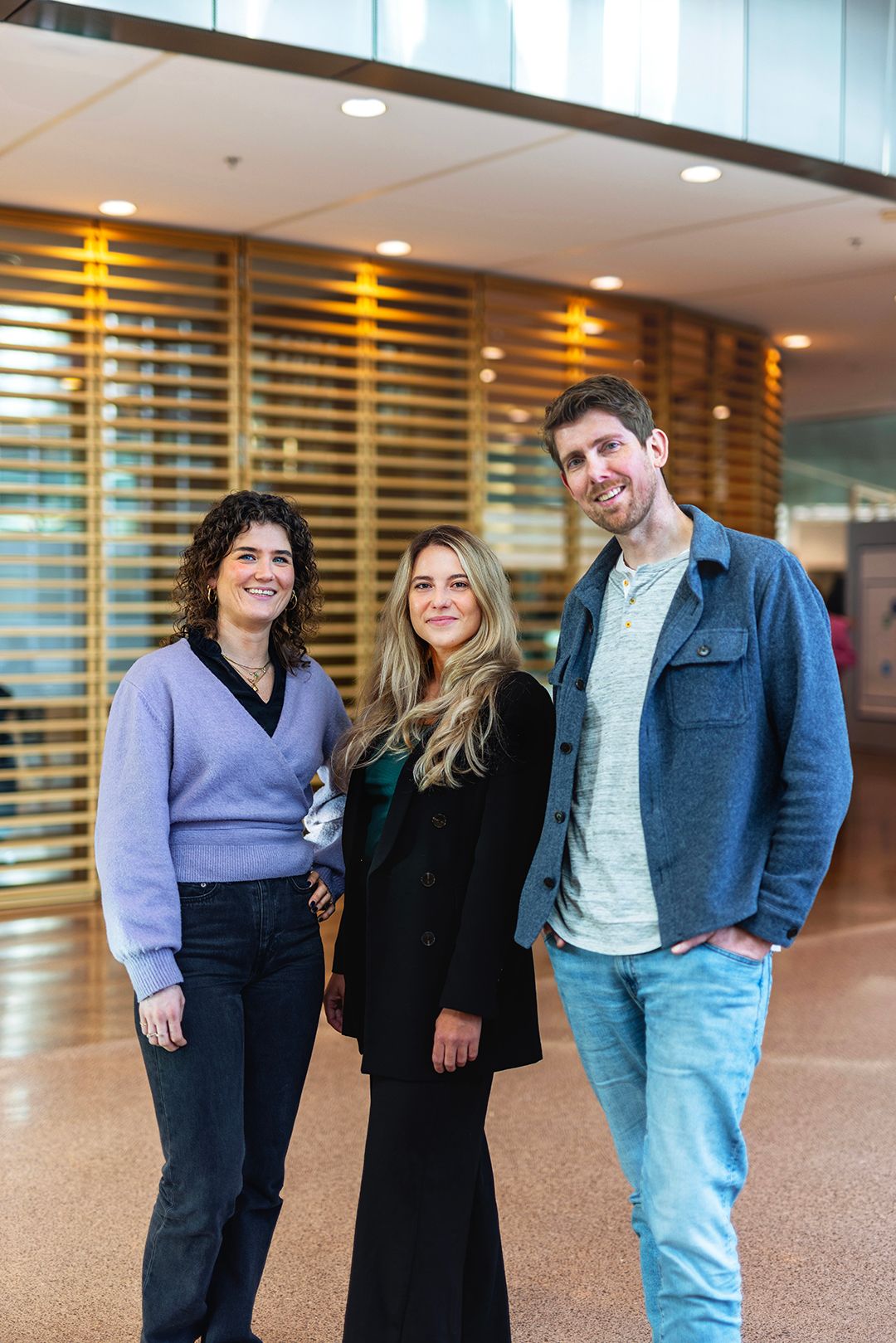
About my "Hello World" moment
My journey in technology began with a simple “Hello, World!!!” moment at the age of 12. That experience sparked a lifelong passion for building software. Though I’ve been in a managerial role for over a decade, I still relish creating software solutions in my spare time. Over the past 1.5 years, I’ve been captivated by the possibilities of GenAI, using it extensively for both professional and hobby projects.
As a Tech Lead within Rabobank, together with more than 150 colleagues and 23 analytics teams, we are responsible for the delivery of data science and software products and services for our entire bank. During the last 2.5 years we focussed on the transition towards end-to-end teams and full-stack team members. For the upcoming years, we focus heavily on scaling the responsible use of GenAI across our entire bank. Part of this is the setup of many new teams that build the GenAI products and services that we use to empower our 1000+ engineering teams, 48.000+ employees and millions of customers.
As you can imagine after reading this blog, we build our products and services with end-to-end teams and full-stack engineers and data scientists. The use of smaller end-to-end teams, allows us to be hyper focussed in our purpose while having strong engagement with our users. In other words…we aim for happy users and engineers in every sprint review.