GitHub Copilot: Generative Coding with AI
Discover GitHub Copilot: An evolution in development workflow. Seamlessly integrated into your preferred IDE, this groundbreaking innovation empowers developers with intelligent code suggestions, streamlining development and harnessing creativity. Let's dive into how Copilot is reshaping coding practices, marking just the initial step toward a future of AI collaboration.

- Constantijn HerpersSenior Front-end developer
Understanding GitHub Copilot
GitHub Copilot, a coding assistant developed by GitHub in collaboration with OpenAI, is an AI-enhanced tool designed to elevate coding efficiency. Through suggestions, autocompletions, and even full code snippet generation, Copilot seamlessly integrates with IDEs, enhancing the coding journey.
Viewed as a collaborative pair programmer, Copilot offers AI-driven suggestions and code generation capabilities that are valuable contributions from a knowledgeable partner, rather than an authority.
While using Copilot for coding tasks, a thorough review of its suggestions is important. Following this, upholding standard workflow practices, including pull requests, ensures robust code quality through collaborative reviews.
GitHub Copilot: Your AI co-pilot for coding adventures. It's like having a rubber duck that writes code, minus the quacks."
Witness in action!

In the first example, the usage of GitHub Copilot is demonstrated with providing vague context to the AI tool. This results in the generation of a suggestion without any code that might be related or helpful. This highlights the importance of giving clear context.

Moving on to the second example, context is provided that the code should check whether a string matches a postal code pattern. As the user provides this context to Copilot, it generates code that checks the string based on a Regex expression. This showcases how Copilot can be guided to generate more relevant suggestions based on the information provided, resulting in code that is aligned with the user’s needs.

Although the 2nd example looks great, it is not what the developer had in mind. He/she did not specify it, but they were specifically looking for a function that adheres to Dutch postal code format.
In the third example, the developer further refines the context for Copilot. He/she adds a specific requirement for the code to follow the Dutch format for postal codes. Copilot then revises its suggestions, taking the new instruction into consideration and providing code that fulfills the criteria for Dutch postal codes, illustrating how the iterative process with Copilot can lead to precise code generation aligned with complex requirements.
Benefits
As shown by the examples, knowing how to interact with GitHub Copilot offers valuable time savings. Its primary advantage lies in maintaining an uninterrupted development flow. Developers will be familiar with the inefficient process of having to switch tools to search on Google or StackOverflow. GitHub Copilot keeps you in the coding zone, leveraging AI to retrieve information while you code.
In summary, GitHub Copilot’s integration into the coding process improves various aspects of development, ultimately allowing developers to focus on their work with fewer interruptions. Its capabilities include code generation, code completion, test composition, and generate documentation, marking it as a versatile asset for developers seeking optimized coding workflows.
Bonus example
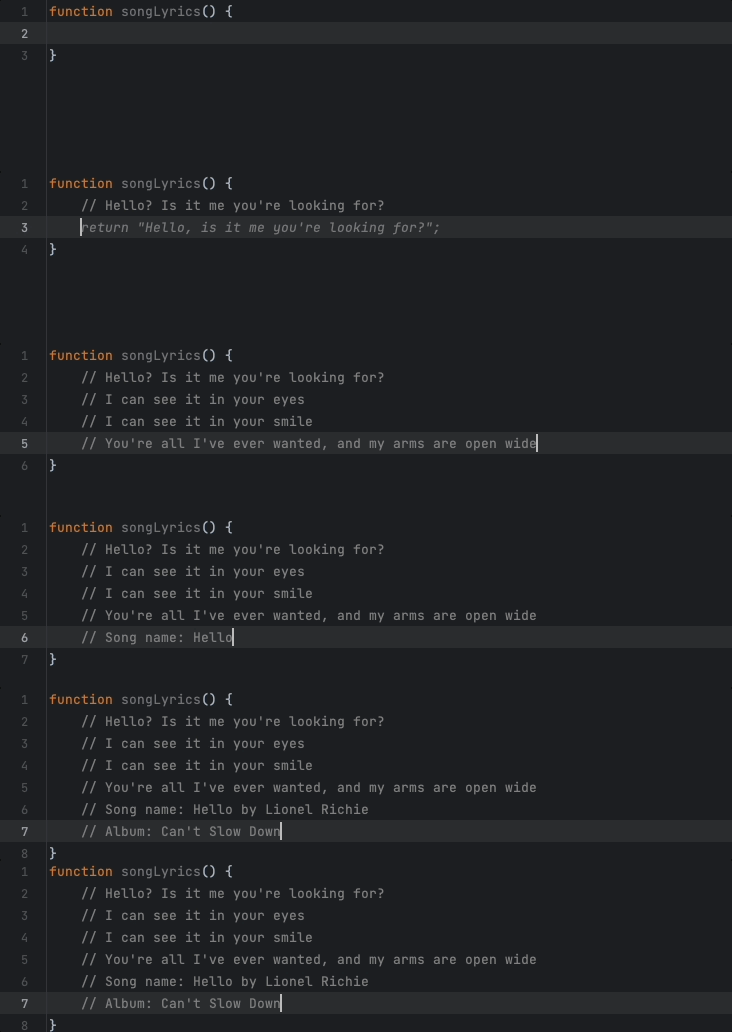
No inspiration on what to do with GitHub Copilot? Try asking GitHub Copilot for lyrics, including song details like the artist and album.
Peering into the future
At this very moment, GitHub Copilot is being expanded with an array of additional features. These enhancements, collectively known as GitHub Copilot X, are set up to elevate your coding experience through the following ways:
- Interactive Chat: Allows developers to interact with GitHub Copilot. Ask questions, refine context for suggestion and more.
- Automated Pull Requests: Generating pre-filled PR descriptions based on changes made.
- Private models: Developers gain suggestions trained on specific codebases, enhancing relevance.
Concluding
Embracing generative AI tools is a crucial step forward for developers in today’s rapidly evolving tech landscape. Those who seize the opportunity to harness these tools stand to gain an edge
The synergy between human creativity and AI’s capability to swiftly generate code, ideas, and solutions is a recipe for innovation. Looking ahead, the future of AI tools appears even more promising. As technology advances, these tools will undoubtedly become more refined, intuitive, and proficient at interpreting users’ intention
Happy generative coding!