Signaling and scanning: The work of the sanction specialist
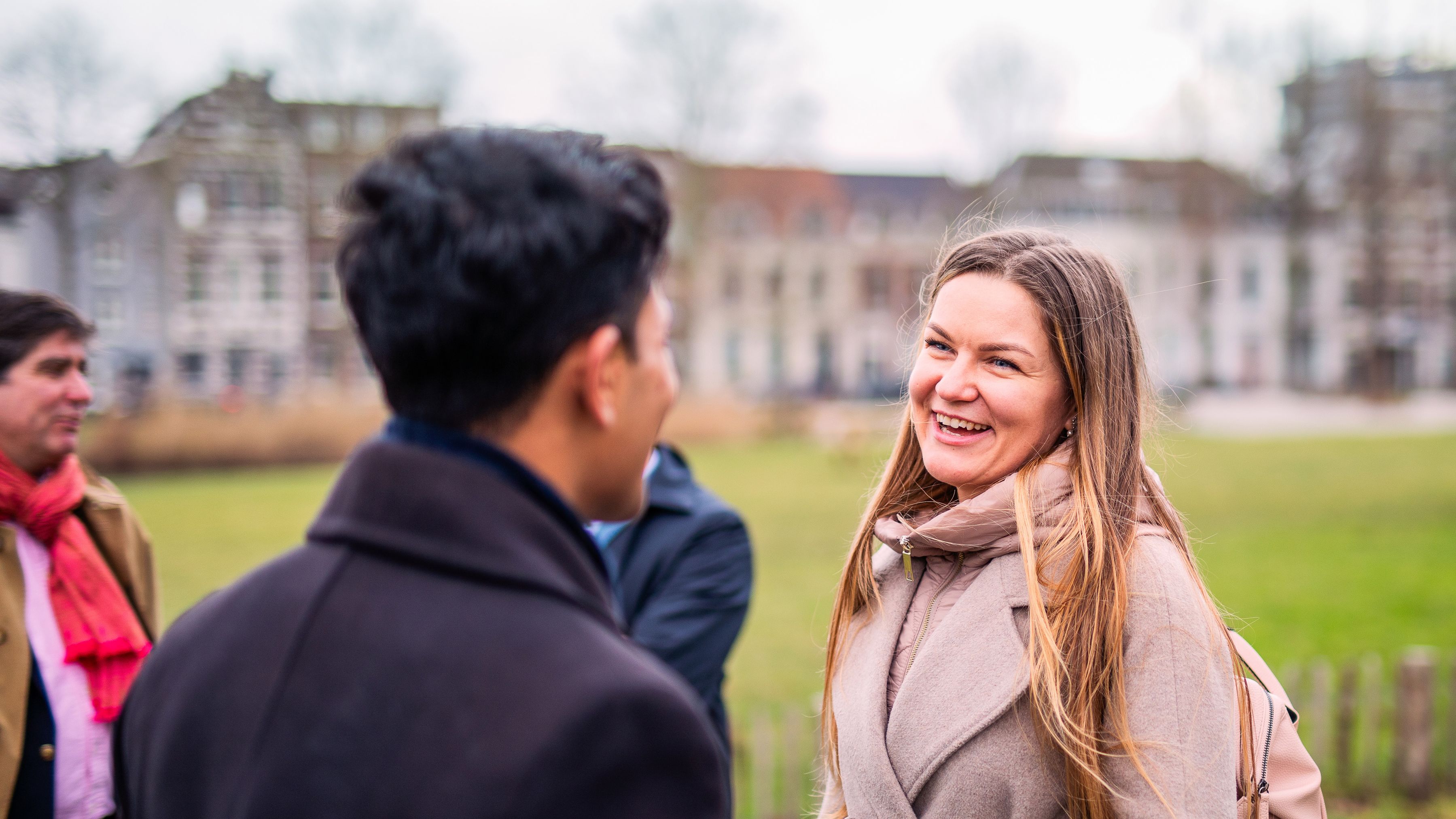
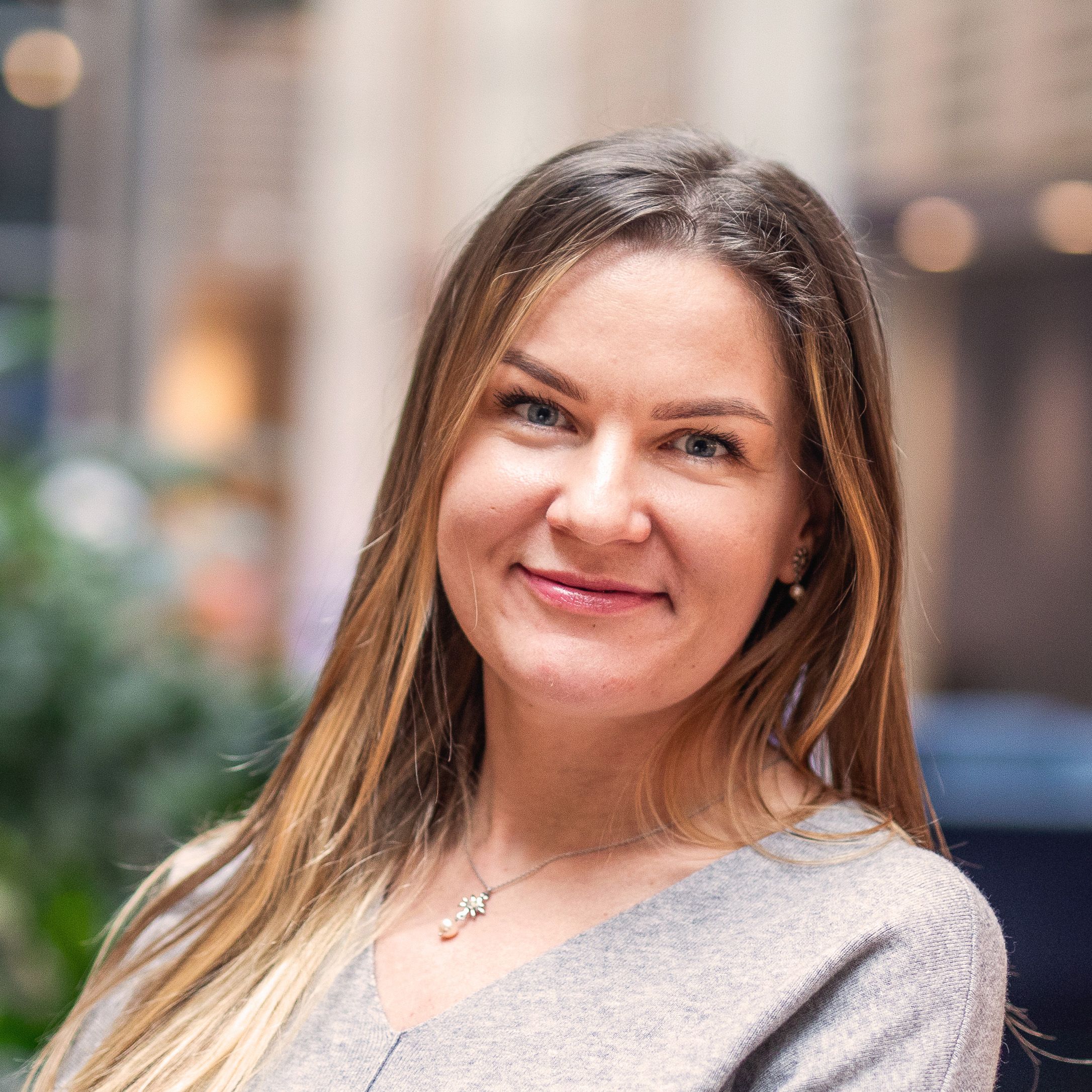
- NataliiaGlobal Sanctions Advisor W&R
- Reading time
A keen view of global finance
Nataliia left her home country of Ukraine when the war started in March 2022. She worked as a specialist in compliance and sanctions. Now, at Rabobank, she is finding her groove again as Global Sanctions Advisor W&R at Financial Economic Crime, in a new team with new challenges.
Nataliia left Ukraine with nothing more than a backpack containing some bare necessities. She went to the Netherlands and ended up in a refugee shelter on a ship in Amsterdam. After a few weeks, she started looking for a job in the Netherlands. “I wanted to do something. Move on. I also needed a place of my own, but without a local job I couldn’t rent an apartment.” After some time, she got in touch with Rabobank, of which she said:- “I actually had never heard of them.” She was surprised by the warm welcome. “During the job interviews, I had some genuine and personal conversations and from the first day on I felt so welcome. ”
Three roles in sanctions
Nataliia worked in Ukraine for 15 years at subsidiaries of international banks. As a specialist in compliance, she knows her way around the various regulations and sanctions. “In Ukraine, I worked for the financial monitoring department and the international sanctions department, which is essentially similar to my line of work at Rabobank.”
She is now Global Sanctions Adviser Wholesale & Rural, which is a different field of work than what she was used to in Ukraine. “We were working mostly on transactions from Russia and Belarus. Right now I don’t only work on regulations concerning these countries, but also other sanction countries like Syria, Iran, and Cuba.”

Curious about the possibilities?
Check out our job openingsShe explains, “First, we have a signaling role. In our team, we identify whether we have all the controls in place for the processes, name screening, transaction filtering, and pre-trade screening. We look at all our systems, filtering, and procedures, and whether all the controls are in place according to the new sanctions regulations. We also do an impact analysis on new regulations and do fact checks with our colleagues from list management. When we see gaps in the processes, we flag it to implementation and process managers to make sure they can close it.”
A second priority for Nataliia’s team is horizon scanning. “This activity helps us better anticipate future opportunities or threats. We try to identify issues in the present that could be of importance for possible futures. We discuss the information we gather from these scans with the team before we draw any final conclusions from it.”
A third activity for Nataliia is answering questions from different colleagues at Rabobank. “We work closely with CDD, who may deal with cases that touch on regulations or sanctioned countries. We help them to get the right information so they can make a good assessment of the client. We also work with compliance managers from different departments on complex cases. Analysts and compliance specialists have a great deal of knowledge on various topics, but if they want advice from a regulatory perspective, they can reach out to us and we can advise them on these specific cases.”
We identify problems in the present that are relevant to possible future scenarios."
A diverse and growing team
Nataliia works in a diverse team, with colleagues from Brazil, Iran, Bangladesh, and the Netherlands. “I have a broad compliance background; others have a background in law or in entity structures. All these different professional and cultural backgrounds help us to better understand the complexity of our cases; we can view the field from different perspectives.”
“I got the opportunity to take huge steps in my professional development. When I started at Rabobank, I was able to take a course in Business English and in 2024 I will start my Dutch language course. I am also active in the Growing Greener Community at Rabobank. This is an in-house community that strives for a greener future, and we are starting with our own offices.
I am also working on my soft skills, from assertiveness to process management. Every year we look at our growth goals and sit down with our manager to identify which direction we want to develop in. Throughout the year you keep track of those goals and see what needs to be done to achieve them.”
“If you want to work at the Sanctions department, you need to be a team player, be willing to help others, and not be afraid to ask for help if you need it. And it is also really valuable if you already have experience in the Sanctions field or adjacent fields.”

Daily work at Sanctions
Nataliia’s team has to work within the guidance from the global sanction packages. This prohibits serving clients who are originally from sanctioned countries. But how do you deal with clients who have an indirect connection with these countries, or clients who are registered in other countries but have a UBO (Ultimate Beneficial Owner) from a sanctioned country? “We usually don’t have direct contact with the clients. So we regularly discuss these cases with the relationship managers or the CDD team.” Investigations like these can show how the bank’s clients are completely compliant with European laws but have strong ties with a sanctioned country. “We make the decisions in a joint effort with the relationship manager.”
Investigations can sometimes leave you at a crossroads about what to do with a client. Luckily for Nataliia, she has a lot of freedom to make her own decisions. She recalls one example with “an organization that collects donations worldwide for people in need. But it is our internal policy to not facilitate transactions to sanctioned countries, which was the case. So we have to be clear about that, but we can always help to find other legitimate ways to send money. In our role, we have a lot of decision-making freedom, as long as you can explain those choices. And you can always discuss it with your colleagues before making a decision. These different viewpoints, all from our own specialisms, really gives you more confidence in the decisions you make. It makes them a team effort.”
The future of FEC
“We constantly monitor new trends and technologies and see what impact they could have on our financial system. These trends and technologies could include advancements in Artificial Intelligence, cryptocurrency, or other ways to circumvent European and global regulations. We have an obligation to remain at the forefront of these developments and help our colleagues when necessary. I envision a future in which human assistance will always be necessary in addition to the increasing automation of work processes.” For Nataliia, working at FEC is more than just a job, “As Rabobank, of course we have a legal obligation, but I think we also have a moral obligation. To protect ourselves and our society against money laundering, against terrorism financing, and to uphold sanctions.”
“We therefore have a close relationship with our FEC Tech department. They are specialists in the domains of IT, data analysis, and DevOps. They help us with our tooling and can give us new and innovative ideas about how we can find and process new information.”
“I feel we do a good job at FEC and Sanctions. It might not be perfect yet, but that’s not a reason to do nothing. We need to improve, and we are doing so, every day.”