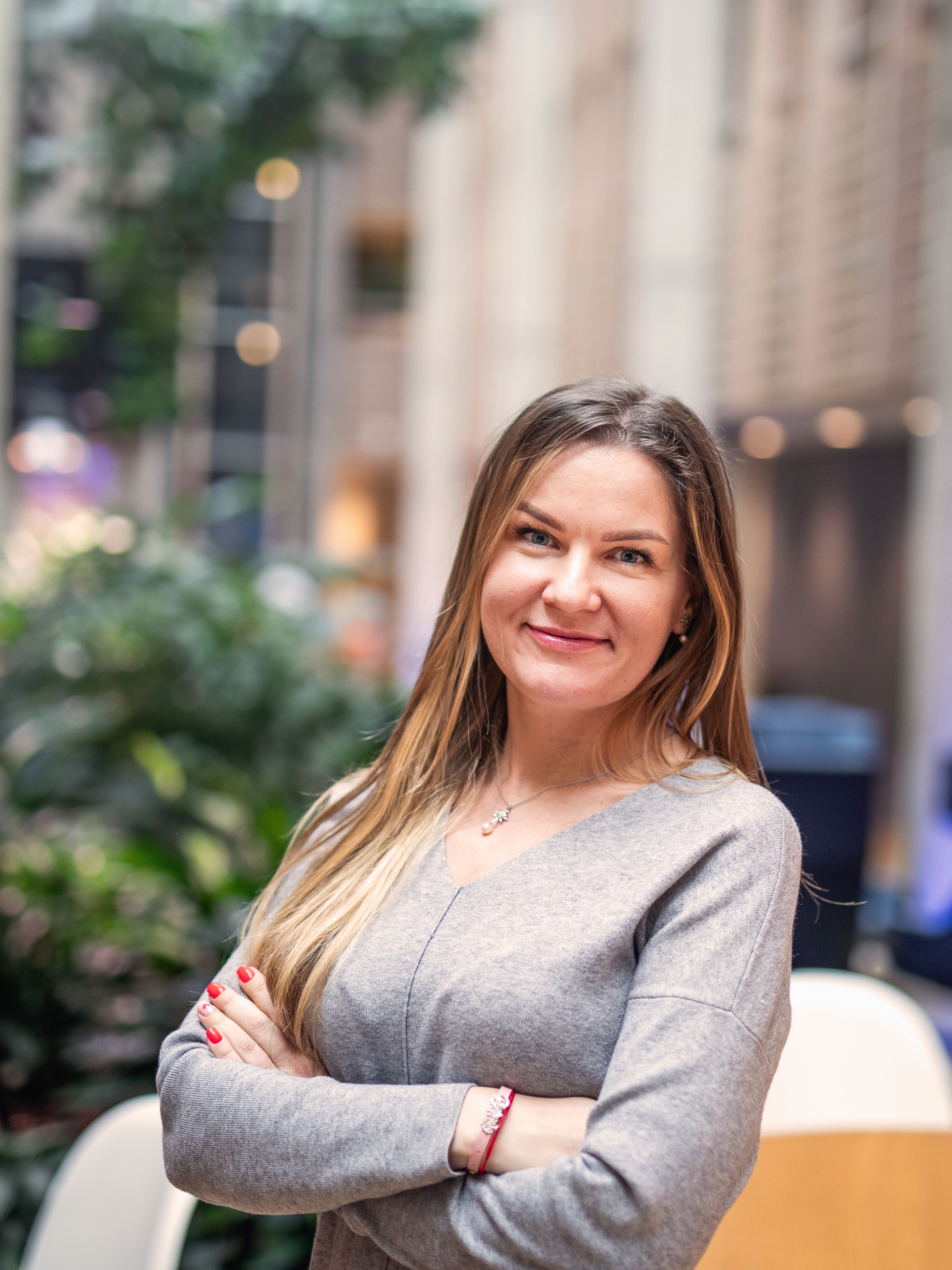
Finding the key to a safer financial world


- Jean PaulSenior adviseur FEC Investigations
- Reading time
From detection to prevention of financial crime
Human trafficking, labor exploitation, and environmental crime are not necessarily topics you that immediately come to mind when you think of Financial Economic Crime (FEC). But from large-scale cocaine trafficking through the Port of Rotterdam to bank card fraud, there is always a bank account involved.
Jean Paul saw it all during his previous positions in various investigative agencies. Now he is a senior adviser at FEC Investigations, the unit within Rabobank that investigates money flows, corporate structures, and clients to prevent money laundering, fraud, or terrorist financing. "I went from detecting to preventing financial crime."
Looking out for each other
Jean Paul describes Rabobank as being big enough to make an impact while remaining a very human bank, despite its size. Even with thousands of employees, people still have consideration for each other and for society. You can see it in everything, from the way we lead to how people treat each other."
Curious about the possibilities?
Check out our job openings"I see myself as an all-rounder," says Jean Paul,”I play defense and offense, acting as the link between policy, strategy, and operations. Besides strategy, I do thematic research, advise senior management on policy choices, and coach analysts. My experience as a police investigator comes in handy for coaching. For example, I coach analysts on conducting interviews with clients or doing thematic research. It gives me great satisfaction when people become more confident and grow in managing a project or their colleagues."

Fixing the system
"I spent 15 years working on the other side—with the police and FIOD (Dutch Fiscal Information and Investigation Service)—where I worked on everything you see in the news: drug trafficking, liquidations, human trafficking, serious organized crime, and financial-economic crime. It’s very important work, but criminal investigation is still sort of like mopping up a leak that hasn’t been fixed. You catch one crook and the next one is already there to replace him; you can never win that battle."
"Within FEC Investigations, on the other hand, I have the opportunity to address the underlying problem. Because I’m behind the controls, I can partially change the system and actually patch the leak better, which is much more effective. It feels like my work has a greater impact here, even though you can never completely prevent crime."
I am at the controls with which I can partially change the system"
"Since I have also worked on both sides, I can build bridges between Rabobank as a private organization and the public sectors. I know how a criminal investigation goes, I know the restrictions and the sore spots. Everything I've done in the past—management, operations, project management, content—comes together here."
Collaborating with scientists
One important change Jean Paul has made within FEC Investigations is to collaborate with scientists. "I've wanted that for some time: a scientific foundation for thematic research. Are we validating our data correctly? Is our method of drawing conclusions correct?"
"Within FEC Investigations, you get all the space you need to perform your role well and to carry out the necessary research. Even if the investigation takes a year, it's all about quality. After all, the vast majority of our clients are legitimate. We only want to put our time and energy into specific clients we think are involved in organized financial crime. That can only be done with quality research."
Having social impact
FEC Investigations employs driven, talented people who want to bring about change and who give something back to society with their work, so that the world becomes a little better. “After all, we are a commercial institution that has to make money and abide by the law. But beyond the legal framework, it's about what you stand for as a bank. For example, in the area of drug trafficking, human trafficking, or environmental crime."

Within the bank's regulated procedures, Jean Paul sees room to make social impact. "The WWFT (Dutch Prevention of Money Laundering and Financing of Terrorism Act) is very strict, but we also make our own policies. It's about who you want to be as a bank, which role you dare to take. We can do just what the law requires, or we can go the extra mile. The smart people who work here take responsibility for making that impact. I like an out-of-the-box approach, coming up with creative solutions and, if necessary, going that extra mile."
"We think about social impact and about what kind of bank we want to be. You could say that as long as the money isn’t flowing through our accounts, there's no reason to exclude a customer or to start an investigation. But shouldn't we take that extra step since we are in a position to make a difference? I feel like management supports me in this respect; FEC Investigations has few concessions to make towards the bank's business interests. Sometimes it is more important to do the right thing than to make a profit."
“You could say that an issue like environmental crime is not our problem. But the suffering that is associated with it affects us all. It's a socially important issue, and we can make a difference.” Environmental crime ranges from money laundering earned from illegally logged timber, to document fraud and tax evasion. "As a bank, we adjust our policies, for instance, we no longer accept certain behaviors and we reject certain payments. We also help the sectors and services fighting this crime with our knowledge and insights. We sit down with each other to see how we can strengthen each other and what can be done. That is incredibly valuable."