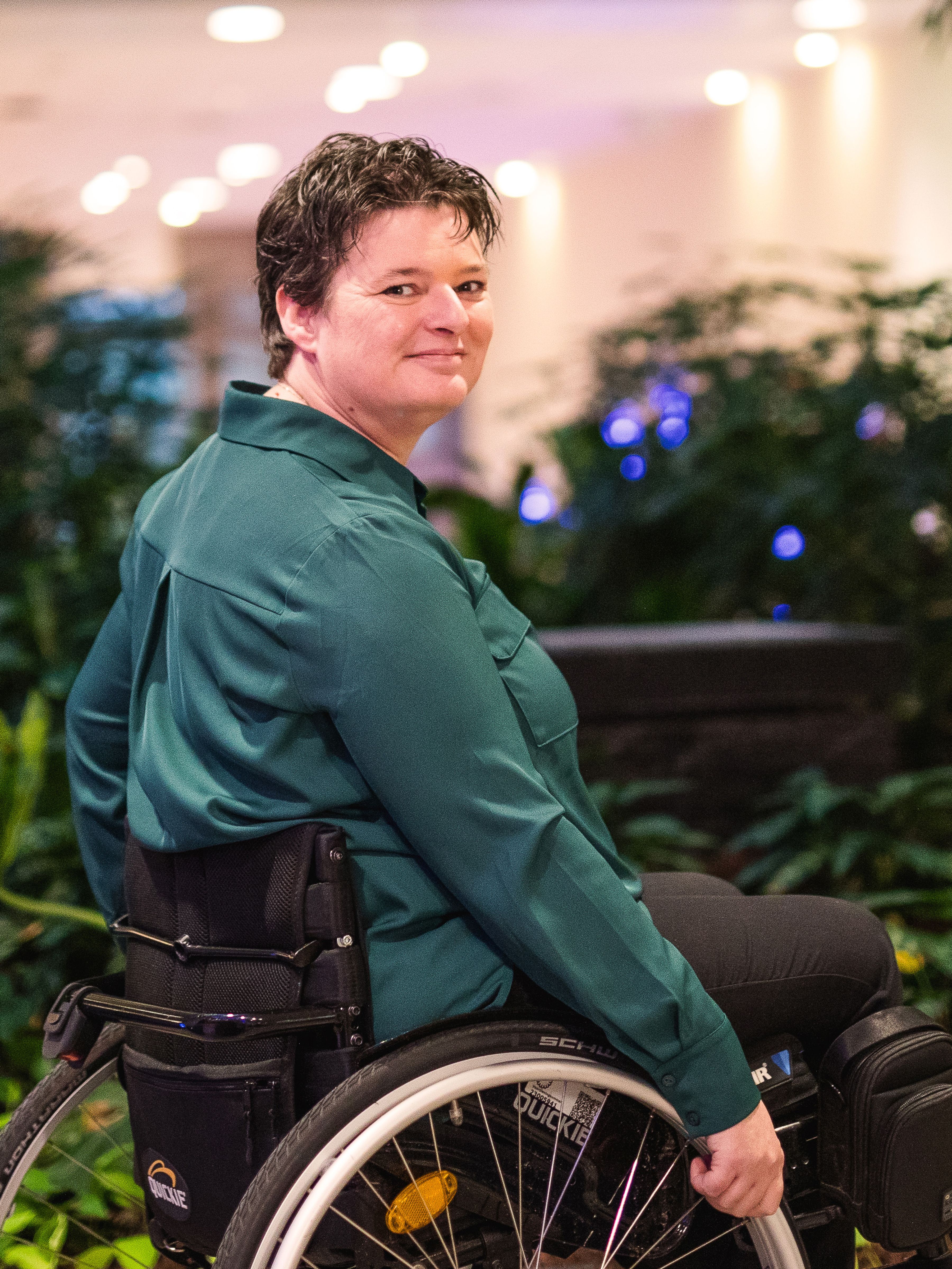
Protecting entrepreneurs from new forms of fraud

- DaniëlleTeamlead Manual Signals
- Reading time
A multifaceted gatekeeper role
Being curious, figuring things out, and getting to the bottom of things. According to Teamlead (FEC TM) Manual Signals Daniëlle, those are the most important traits for getting started in Financial Economic Crime (FEC). But you don’t have to be a sleuth. "We want to discover how to prevent financial crime."
“When I was doing my master’s degree in International Studies, I focused on Latin America and the theme of Global Security. I researched topics such as world politics, economics, and corruption. I knew then that I wanted to do something related to fighting financial crime after I graduated. Just not yet where, or what exactly. That's why I went traveling after completing my degree, while keeping an eye on LinkedIn, where I saw a position at Rabobank.
Starting in a new field
Danielle started out as an FEC analyst in the Transaction Monitoring (TM) department. "In 2019, I joined a team of enthusiastic, inquisitive people. Most, like me, were fresh out of school. Only a few colleagues had previously worked in the justice system, policing, or criminal investigation. Little was known about FEC (which had only just been established) at that time within the organization and things were progressing rapidly. Fortunately, there was plenty of room and attention for development. In addition to customer research, we worked on knowledge transfer and policy direction."
Curious about the possibilities?
Check out our job openingsTools to grow
The field grew explosively, so initially the department was focused on handling cases. Once the department was set up, the focus shifted to people. Within FEC, that led to smaller teams with more personal attention. So within three years, Daniëlle became a team leader and was helping 15 team members grow in the profession.
"The opportunity presented itself and I seized it," Danielle says in a surprisingly calm tone. "Yes, I hear that more often," she laughed. "I'm very calm, unlike the pressure cooker of my career." Of course, I also had my doubts. Can I do this, is this moving too fast? Fortunately, Rabobank believed in me and gave me all the necessary tools to grow."

Preventing fraud
As an FEC analyst, you check transactions and investigate where the money is coming from. In Transaction Monitoring, you can specialize in two areas. Team Alerts focuses on reports coming from Rabobank's internal transaction monitoring system. Team Signals conducts investigations based on external signals. "Both teams look at transactions, just from a slightly different angle. I work in Team Signals. We deal with external reports: a newspaper article, a call from CDD (Customer Due Diligence) or a tip from an entrepreneur or collaboration partner about possible fraud."
As an example, Danielle describes what is known as tap fraud or contactless payment fraud. "Tap fraud is when store employees pretend that a customer has returned something, but put their own debit card on the device for the refund. It often occurs at businesses that sell shoes or clothing, because returns are fairly common there. The company that supplied the payment machines discovered a pattern. They—like us—are required by law to check the transactions made with their devices. What amounts are involved, is it a return, can we detect an abnormal pattern? They transfer the data to us and we investigate what exactly is happening. If we think something is really not right, we inform the business."
The most important skills you need are logical reasoning and flexibility. "

"At the same time, we help entrepreneurs who face this kind of risk think about how we can prevent this from happening. Can we set conditions that limit this kind of fraud? Today, you have a limit on the maximum amount you can top up at a store or gas station. Yes, we can act quickly to stop a questionable transaction, but ideally we want to prevent tap fraud. That's what our gatekeeper role is all about."
Learning about the world and working on yourself
New analysts on Team Signals first undergo five months of training at the Transaction Monitoring Campus. There, in addition to doing customer research, it's all about personal development. Where would you like to end up and what opportunities are there?
"The most important skills you need are logical reasoning and flexibility. The work environment is changing rapidly. When a country suddenly ends up on the sanctions list, it has an immediate impact on your work and you have to be able to switch gears quickly. In addition, you should enjoy figuring things out most of all. Being curious. You learn about business: corporate structures, taxes, imports, and exports. And we don't separate cases into private or corporate, so you deal with all kinds of files and cases. One day it’s crypto, another day it's foreign risks. You learn an awful lot about the world."

"As team lead, besides operations, I also do some HR work. I conduct job interviews with new analysts, do salary negotiations, and supervise reintegration processes. I completed a variety of courses to learn about everything from coaching to drawing up a plan for the UWV (Employee Insurance Agency). I am also working on my personal development through the coaching program for team leads: the focus there is on my own talents, qualities, and challenges."
"What do I want to do next? I don't know yet. You can go in any direction within Rabobank, like management or another department. As team leader you can basically work for any team. But for the time being, I will remain team leader at FEC. In addition to keeping up with cases and files, I answer questions and brainstorm about the future of this departmentwith the management team. The role is extremely versatile, which suits me fine."