How inclusive design can drive innovation
Earlier this year, Rabobank organized its yearly ‘Human Side of IT’ event. A day where internal as well as external expert speakers are invited to speak about their passion and inspire us with their journey, wisdom and knowledge. The goal of the event is to help us reflect on the importance and impact of IT, for both ourselves and society. Being an ‘Human side of IT’-enthusiast myself, I very much looked forward to this day and to be boosted with new insights and inspiration.
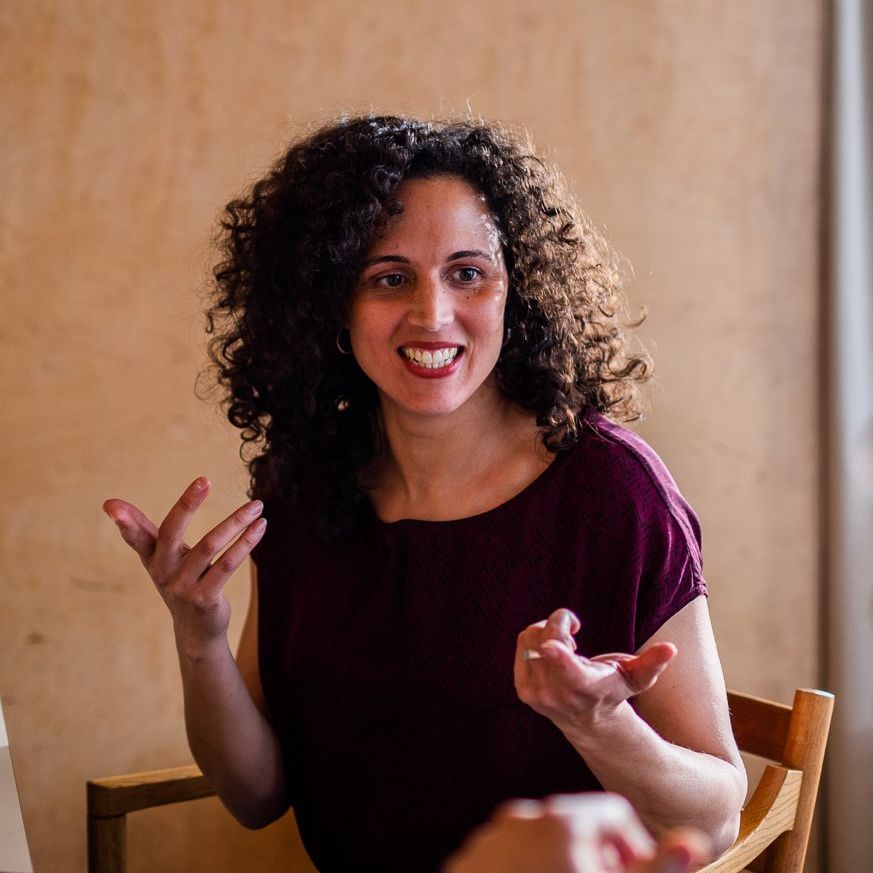
- Danielle AlmeidaScrum Master / Business Analyst – Housing
Being passionate about Diversity, Equity and Inclusion myself, this talk got my attention right away. Because, how inclusive are we as Rabobank, when it comes to designing new features and products for our customers? How do we – as IT teams – think about all the different customers we have, when we develop our features and develop new ideas? It immediately got me thinking about my own team and the products we develop there.
Inclusive design works two ways
What’s interesting is that Floris Horsman – Cloud Solution Architect at Microsoft – starts this session by explaining several options within Teams. Him being so transparent about his own visual disability, made me wonder if there were colleagues in the past, that have disabilities and did not bring it up. I can imagine there is a hurdle to do so and that this might have caused uncomfortable situations.
Floris explains that the benefits with inclusive designing works two ways. It helps the people with a disability in their day-to-day life ánd it can bring innovative ideas that can create a better experience for all of us. Technology is increasingly important in our daily life. The hybrid way of working is here to stay. It becomes increasingly important that technology is accessible for ALL of us.
Accessibility
So, what does accessibility mean? Accessibility means different things to different people. Within this new environment with working remotely, it also makes it more difficult to notice if someone has a disability or not. Floris plays an audio sound where different people hear different words. Even if you know the word someone else is hearing, it is very hard to hear it. A powerful way of showing how the same event can be perceived differently by different people. Floris shows us that it is okay, but also that we should be aware of it.
Disabilities as a mismatched human interaction
Disabilities come in many forms: visual, hearing, learning or cognition, speech, mobility, neural. Since 70% of the disabilities are invisible, you can never assume that you know someone’s disability. Also, it could be that an invisible disability is more challenging for a person then a visible one. Next to that, a disability can be permanent, temporarily or situational.
Floris rephrases the meaning of the word ‘disability’ from a ‘personal health condition’ to a ‘mismatched human interaction’. With this rephrasing of the meaning, it shifts the emphasis from the person with the disability to its surrounding and the situation the person is in. A personal story of Floris illustrates this perfectly. As a little boy, Floris loved to play field hockey. He was able to see the ball better under certain circumstances. When there was more contrast between the ball and the field, if there was less sunshine, when he played in a central position on the field. It demonstrates that a disability is not just about the health condition of a person but that it is also largely dependent on their surroundings.
Accessibility as a responsibility as well as an opportunity
Roughly 20% of our world population has one or more disabilities but just 10% has access to the product they need. Accessibility to all people is a responsibility as well as an opportunity. It is a way to drive innovation and attract key talent.
Floris explains this with the example of the invention of the typewriter. A blind woman wanted to write love letters to her lover. She did not want to dictate the content to her assistant, because it was so personal. A world changing invention that was initiated because of a visual disability.
The Inclusive Design Methodology
So, how do we go about it when we want to become more inclusive in our design of products?
- The first step is to recognise exclusion. Which group(s) of people do we exclude with our design?
- The second step is to learn from diversity. Listen and learn from the people with the different disabilities. They are the experts. How did they overcome certain barriers and learn from it?
- The third step is to solve the problem and extend to many. Usually when you solve a problem for one person, it benefits more and you’re able to implement this solution for many people.
Accessibility built in, not bolted on
In the ideal situation, a team considers being accessible to all in your design beforehand. This approach is usually way more cost efficient, and the solution is better most of the times. So, accessibility built in, not bolted on. It also means that a team should incorporate accessibility into their decision-making process and embrace it in order to build a better application.
Fix the basics first!
A colleague asked if Floris had any ideas on becoming more accessible in the area of banking from his perspective. His answer was very clear: fix the basics first. Making sure that the core features within the banking app that we offer are accessible, is key. Start with low hanging fruit. Colour contrast, size of the letters and explain the purpose of a table or graph in words; don’t just use graphs. This enlarges the group of customers that are able to actually see the products that the bank offers…
Enriched perspective
Floris’ take on inclusive design really enriched my own perspective on being more inclusive for our customers and being more aware about this subject to and with my colleagues. The Inclusive Design Methodology will definitely be added to my way of working. I’m looking forward to bringing value to a broader range of customers and I’m ready for it!