At a career crossroad? Tips for navigation
Do you feel stuck in your career or crave a new challenge? Or you want to explore different areas but are overwhelmed with anxiety about why, which direction to choose, and where it will lead you?
Do not worry, you are not alone in feeling this way! As a test automation engineer with over 10 years of experience on various projects, I have faced these challenges many times throughout my career.
Starting out in testing can bring about a lot of uncertainty because it is a role that allows you to explore and blend various disciplines like coding, DevOps, and business analysis. As you advance, you may find yourself questioning which direction to pursue for your ongoing development.
Given that, I would like to share ideas on what has helped me in my career and how to navigate these crossroads. I strongly believe everything in your professional journey is a choice—whether you decide to take risks and choose the "red pill."

- Kateryna BurtsevaTest Automation Engineer
1. Skills and competencies (The Construct)
“This is the Construct. It's our loading program. We can load anything... From clothing to equipment, weapons, training simulations; anything we need” "
Everyone in tech understands that learning one coding language or tool is just the beginning of your educational journey. I often find myself wondering why certain parts of an application work the way they do, why we use specific development approaches or tools, and what might happen if I try different methods to interact with user interfaces or backend. But to be honest, the last one is more of QA mindset.
By asking these questions, you eventually find yourself reading documentation about new programming languages or technologies, which means you are already expanding your skills.
Here are some ideas that helped me enhance my skills:
- Be curious and do not afraid to ask questions: this will help to define area of interest and explore or extend it later.
- Assess current skills: Identify areas for improvement by yourself or by asking your colleagues for feedback and be ready to accept it.
- Develop new skills: Like Neo downloading new abilities, exploring cloud technologies (AWS, Azure) or new programming languages (Python, Go). Use platforms like Coursera or Udemy to stay updated.
At Rabobank, you get a lot of space to develop yourself including time, budget, and support. With the following resources, you can enhance not only your professional skills but also personal ones, such as presentation skills:
- Time To Grow
- Code academy
- Learning events in communities
- Wellbeing events
- Speakers academy
2. Interests and passions (follow the white rabbit)
Technologies are changing rapidly. Yesterday, we relied on books, Google, and Stack Overflow to find solutions to various technical (and non-technical) challenges. Today, we ask AI for everything, even creating a vacation plan.
Ten years ago, to pass a technical interview you had to write a code using pen and paper but nowadays it sounds like The Stone Age approach. And I hope you are not stuck there!
All of these encourage you to be flexible and open-minded, which also helps in your career to:
- Identify interests: Discover what excites you, such as cybersecurity or data analysis.
- Explore new areas: Experiment with Artificial Intelligence, Machine Learning, blockchain, or Internet of Things.
- Align work with passion: Transition to roles that align with your interests or explore opportunities to use them on your current assignment.
- Stay informed: Follow tech news on platforms like TechCrunch, Wired, or Medium.
3. Career goals and ambitions (The path of The One)

Everyone saw these videos on YouTube “How to become C++ developer (or any other) for 24 hours”. However, the short answer is - in no way, sometimes you really need it. Ok, maybe not for programming but certainly to learn how to cook lasagna or to ride motorcycle. The problem is that “the goal” is spontaneous, unclear, not achievable for a defined period (24 hours) and let’s be honest does not make much sense.
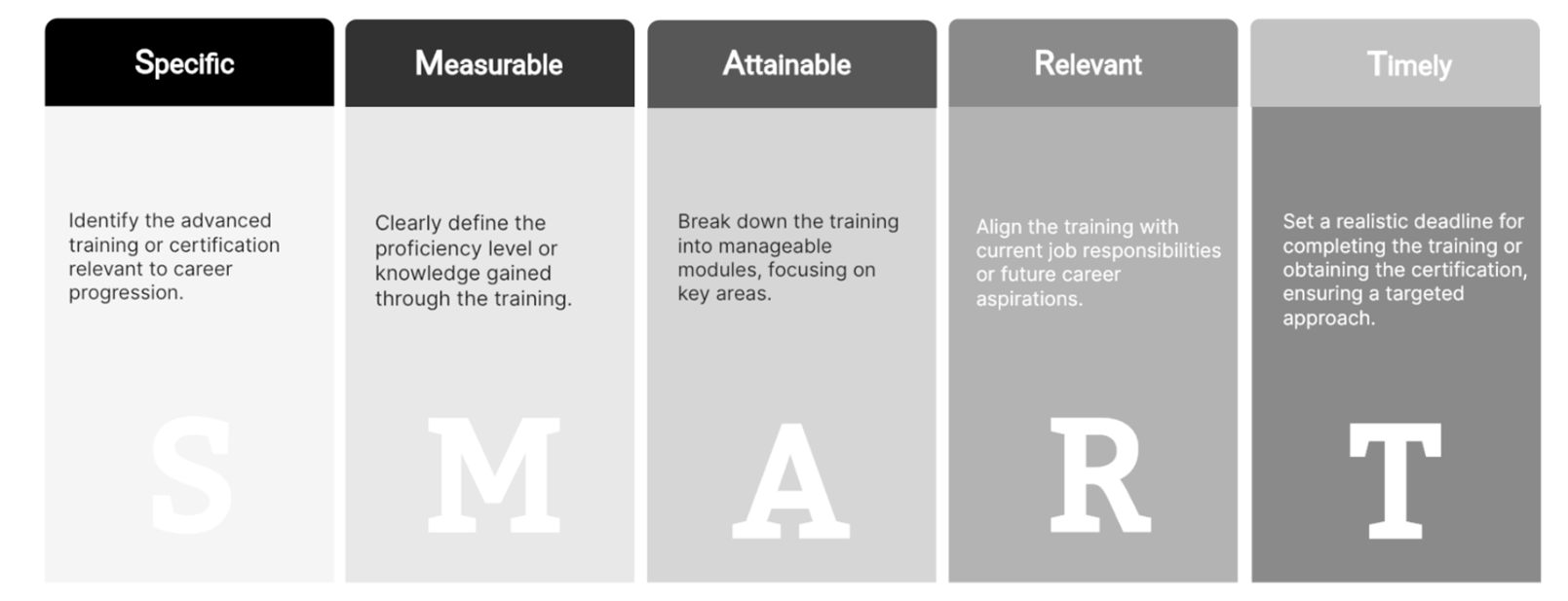
Proper goal setting is already half the battle. It helps you align your expectations and develop in more effective ways. I usually use the SMART system to define goals which helps me to:
- Set proper long- and short-term goals: For example - Achieve specific certifications (Oracle).
- Stay flexible: Adjust your goals as you gain new insights and experiences.
Here is an example how it might be used for certification:
4. Professional network (The Zion network)
Professional networking is usually underestimated. But as an expat I would say that it is crucial. With the help of your network, you can gain reliable support with career opportunities, knowledge sharing and cultural exchange, professional growth through collaborations, mentorship and much more.
Here are some tips how you can expand your network to make it not only big but reliable and relevant too:
- Leverage current network: Use LinkedIn to stay connected.
- Network actively: Attend industry events and join professional groups.
- Build relationships: Engage in community forums like Stack Overflow and contribute to open-source projects.
- Explore volunteer projects and offer mentorship.
- Seek like-minded people to work together on projects and/or initiatives inside or outside organization.
Upcoming events inside Rabobank and outside in the world:
- Women In Tech (Rabobank) - 21st November
- Engineering week (Rabobank) - 12th November
- Devoxx - 7-11 October 2024
- WebSummit - 11-14 November 2024
5. Work-life balance (The balance between matrix and reality)

Among friends, we joke that a true developer doesn't see the sun—and that's not just because of Dutch weather.
But jokes aside, sometimes on the way to our success we forget that we need to have a balance. Quality time with your family and friends or just reading alone or any other activity that allows you to switch context can bring much more than you expect. It can reduce stress, increase productivity, better decision making and in general personal growth.
To succeed in finding a proper balance, follow these steps:
- Evaluate balance and define priorities: Assess your current work-life balance and ensure your personal and professional priorities align.
- Manage your time: Use tools and techniques to plan and manage your workload, such as Pomodoro, Notion, and Todoist.
Personally, next resources helped me a lot to revisit my approaches for work-life balance and improve it in better ways
- Deep Work: Rules for Focused Success in a Distracted World by Cal Newport
- Essentialism: The Disciplined Pursuit of Less by Greg McKeown
- "Atomic Habits: An Easy & Proven Way to Build Good Habits & Break Bad Ones" by James Clear
- The Huberman Lab Podcast
- WorkLife with Adam Grant podcast
In summary, by exploring these dimensions, you can navigate career crossroads more effectively. Like Neo in The Matrix, mastering different dimensions of reality, you can explore various aspects of your career to find a fulfilling path forward. Remember, navigating your career path is an adventure—embrace complexity, unexpected discoveries, and be courageous and honest with yourself along the way.