Data Science: Answering questions with data


- Jeffrey PowellSenior Data Scientist
- Reading time
Using data to predict a better future? It’s precisely what Senior Data Scientist and Economist Jeffrey Powell does. Jeffrey works at RaboResearch, Rabobank's research division, where he focuses on the Dutch economy and global financial markets.
Jeffrey is currently the lead for a small team of data scientists who perform research on the Dutch economy and financial markets. In this role, he uses both his economic and data science skills to build forecasting and explanatory models.
Building stories
“Our forecasting models are used to predict what’s going to happen in a specific economic trade sector. For instance, how vulnerable is the Netherlands to a trade shock? For example, how would the Dutch economy be affected if another country stopped exporting trade goods or commodities to the Netherlands? One example of how my team and I answer these types of questions is the forecasting models we develop to determine how GDP (gross domestic product) will develop in the future.”
“We make forecasts for other sectors as well, such as construction and manufacturing, where data and forecasts play a big role. Our stakeholders are usually data analysts and economists within the bank, for whom forecasting is critical. They need to know what decline or growth to expect in the future, especially when making loans or establishing partnerships with other organisations.”
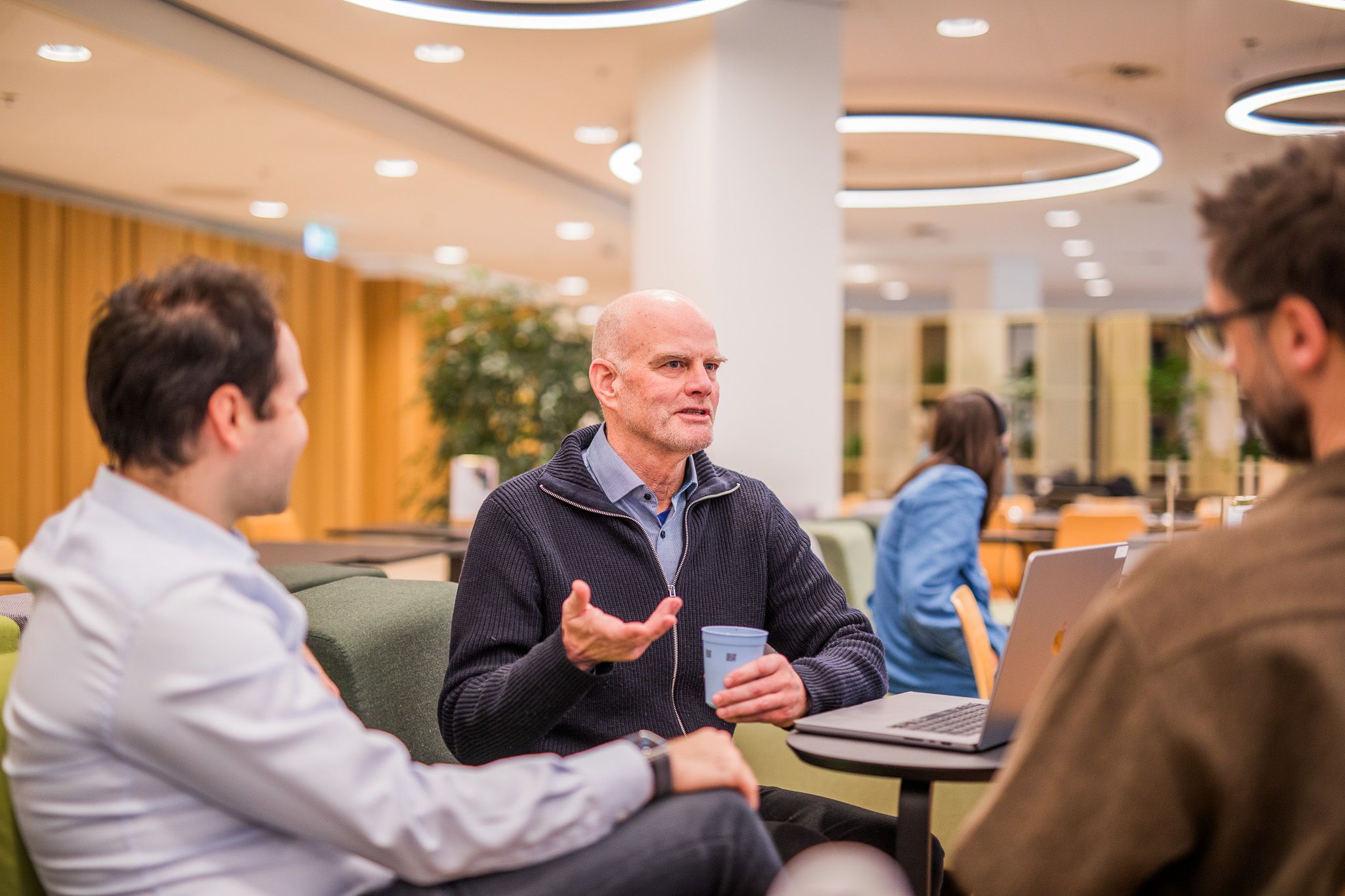
“As a data scientist you’re not just sitting behind your desk doing research, rather, you’re addressing real economic questions for which you need to tell a story. That means you need to translate data into output which tells a story for a broad audience. Besides technical skills and analytical understanding, you have to be able to explain research results comprehensibly, or no one will understand.”
Working with modern techniques
What role do new techniques such as machine learning and AI models play in data science? Jeffrey: “In a very short time, AI, machine learning, and large language models have become extremely useful aids for data scientists, which allow them to run more complex data simulations. When building an econometric model there can be more than 100 variables that might help to predict GDP. Machine learning lets you automate the process to incorporate all of the indicators in the model, whereas that was almost impossible before. It’s useful that the data scientists I work with all have programming skills too. That greatly benefits the adoption of new techniques.”
Social responsibility
“The main reason I joined RaboResearch was to have access to large data sets. But the culture also appealed to me, as well as the department’s focus on larger social issues. This is important to me personally: we have social responsibilities to our clients, the Netherlands, and the world. At Rabobank we focus on sustainability, the energy transition, and problems in the housing market.”
Sustainability is a key issue for Rabobank, its clients, and society. The role of data science at RaboResearch is to investigate the relationship between the economy and the environment. “There’s a lot of room for creativity in my department, and we are encouraged to set up projects of our own that interest us and the bank’s stakeholders.”
See your work come to fruition
“I played a small part in a project where we looked at how the economy impacts the effects of greenhouse gases on the environment. Rabobank focuses on sustainability within the markets it is active in. That makes companies working hard on reducing C02 emissions in their production process interesting partners for Rabobank.”
It's not just talk – we act on it."
“The project was quite straightforward. Our models produce forecasts for different sectors like construction, manufacturing, or retail. We combine our forecasts with external data to measure how a change in production will influence the amount of pollution. By connecting these two resources, we can create scenarios which tell us how to find a balance between economic growth and climate impacts.”
“What attracted me to Rabobank was that you really get to see the results of your work. These types of projects distinguish us from other banks. When we say, “sustainability is important for us,” we mean it. It’s not just talk – we act on it.”