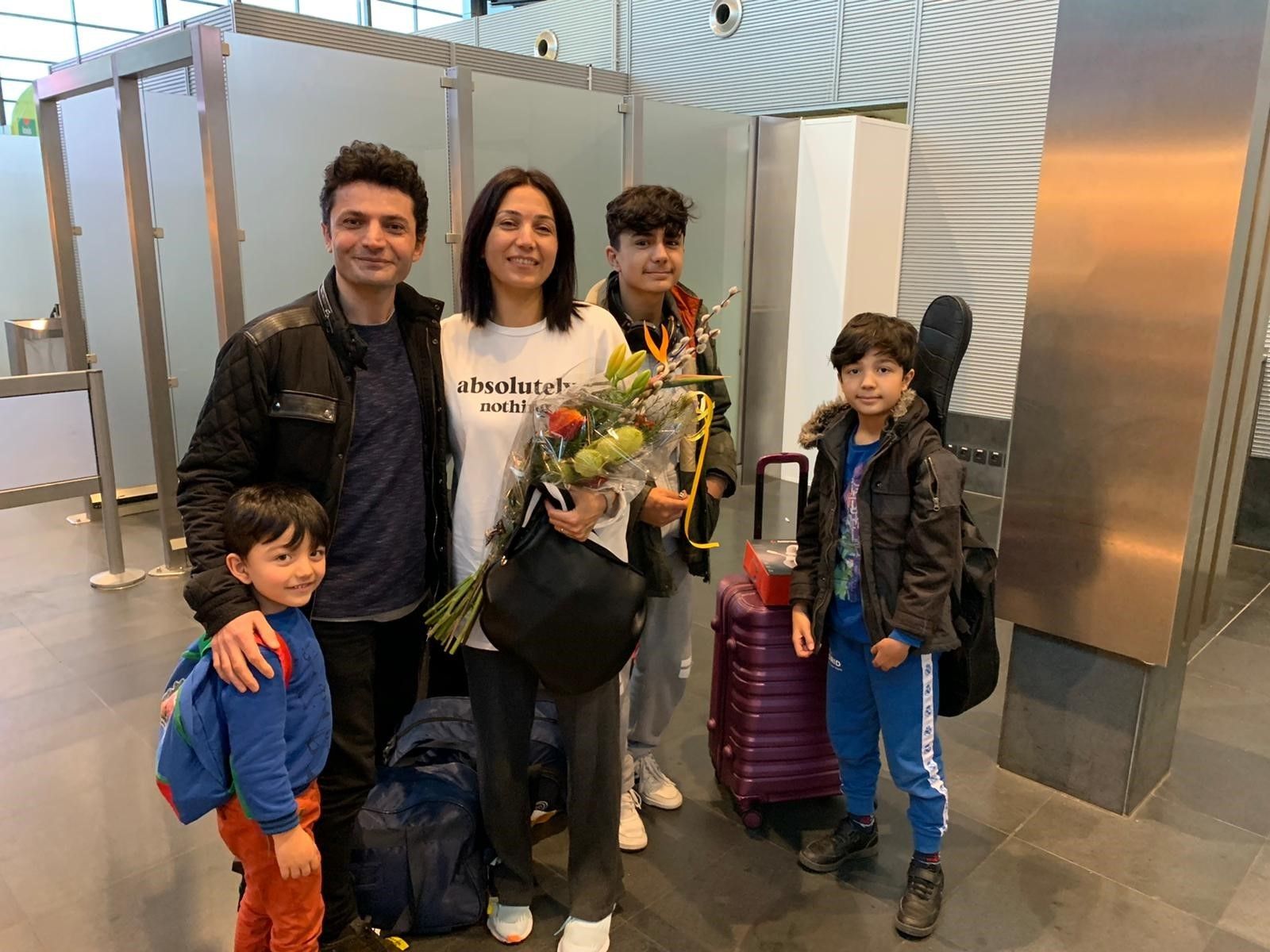
On the run: Serdar on his second life in the Netherlands and at Rabobank
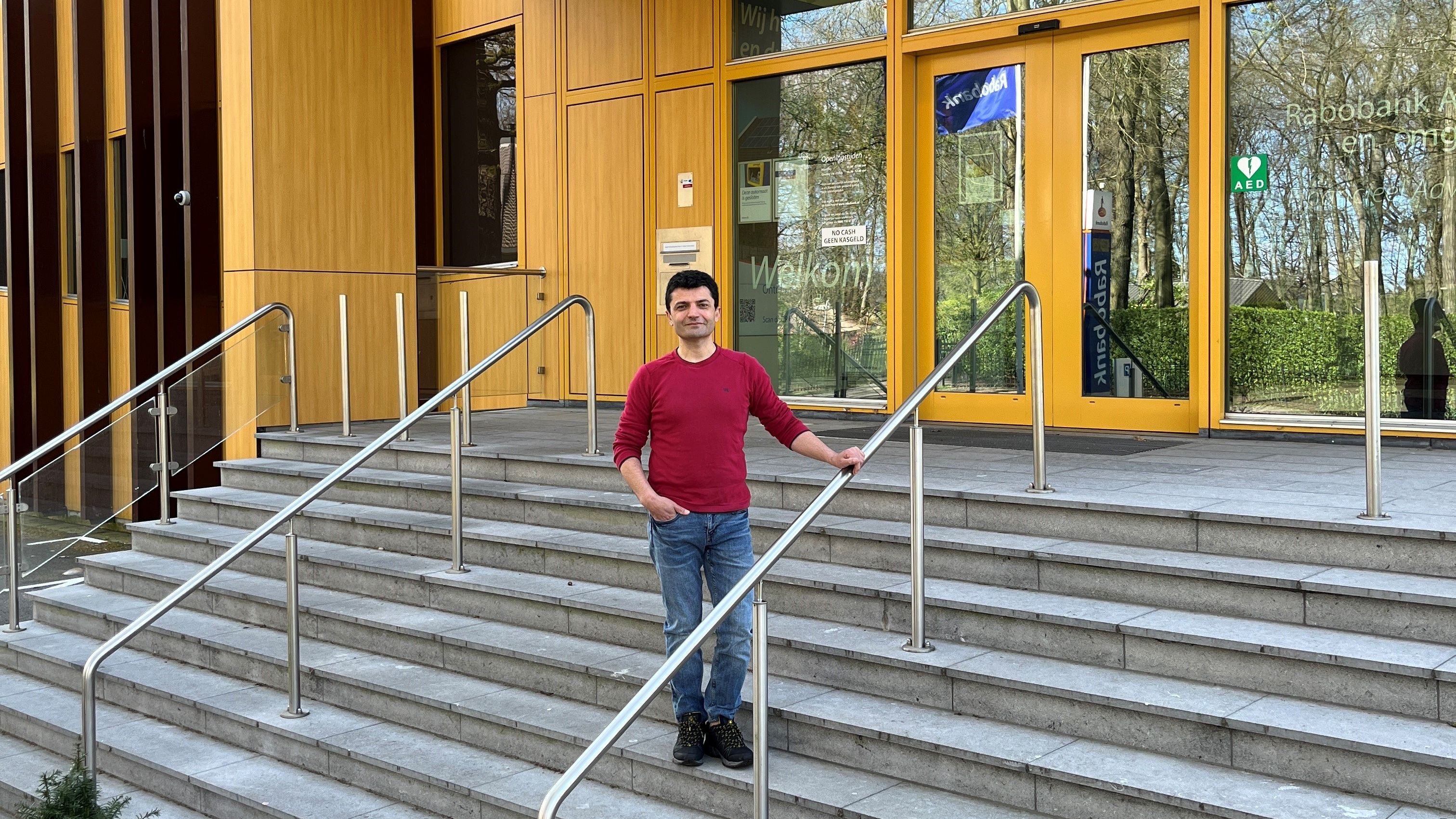
- Serdar SahinFEC Analist
- Reading time
Hiring fifty people with a refugee background within three years – that was Rabo's ambition in April 2022. A triumph: that goal was already achieved in January 2024. As a partner of Refugee Talent Hub, a platform that connects refugees and employers, the bank takes diversity and the together-promise – in which everyone gets the same opportunities – very serious. Serdar Sahin is one of the fifty refugees who have been hired by Rabo. In this article he opens up about the extraordinary journey he made – all the while balancing between sadness and hope. "The support of those around me always kept me going," he says.
Five years ago, Serdar fled Turkey where he lived a happy life with his wife and three sons. Due to circumstances, he had to leave his home and hearth overnight. “For eighteen years, I had a successful career. But my life as I knew it no longer existed. Everything that I had built up, and all my friends and family – I had to leave everything behind.”
Feelings of guilt
This was the start of a very difficult period. Serdar said goodbye to his wife and children and left for Greece. "I had planned many things for my future, but becoming a refugee in Greece was not on that list," he says with a keen sense of understatement. "Once I was there, I didn't know what to expect. Actually, I had no expectations at all and just let everything wash over me."
A month later, he continued his journey to Schiphol Airport. "The customs officers were very friendly. Within a few hours, we finished all the procedures and I was allowed to proceed to Ter Apel." After ten days of paperwork, his stay in Ter Apel was over and he was allowed to move to Delfzijl. After that, it took about a year and a half until his asylum in the Netherlands was completely arranged. In the meantime, he stayed at various shelters, among which Apeldoorn and Rijswijk. "The staff at the shelters were always very nice. Despite everything, I was satisfied with my living conditions in those places."
To have to leave there and leave everything behind, I hope never to have to go through something like that again."
Falling and getting up again
Missing his family was definitely the most difficult part, but there were other, smaller things that he struggled with, which he can luckily laugh about. “I couldn't ride a bike very well, but in a country with more bikes than people, that's not very convenient. When I stayed in Delfzijl, I started practicing a lot. That got me a lot of bruises and scrapes!”
Another thing he had to get used to: the landscape. "Moving from the mountains to flat country with the highest point being 320 meters – that was pretty crazy. And I should probably just not talk about the weather... But the thing I struggled with most was the Dutch language. Learning a new language at 45 years old is not easy." Despite his struggle with that wildly foreign language, his command of it, by the way, is second to none. In just five years, he has managed to make himself well understood, and that is immensely impressive.
But for Serdar, learning new habits and adapting to another culture is a small feat compared to the moment he had to leave his native country. "That's what I found most difficult," he says, looking back on it. "To have to leave there and leave everything behind, I hope never to have to go through something like that again."
Networking, networking, networking
Once in the Netherlands, Serdar wanted to make himself useful as soon as possible. “Getting benefits didn't feel right to me. I wanted to work, to contribute something. In addition to the courses I took, I started looking for a job. I also looked for volunteer work. My language coach pointed me to some places where I could apply. Eventually, I was hired at De Voedselbank [a Dutch food bank organisation, ed.]. I worked there for about six months and I will never forget that place. Everyone was extremely kind, I felt right at home there."
Once his residence permit was complete, he started looking for a place of his own. He found it in The Hague. “My wife and children were still in Turkey. I did miss them, but I tried to focus on improving my Dutch. I started a program called “Transition Year Higher Education” at The Hague University of Applied Sciences. At first my application was rejected, because normally that program is not meant for 'old' people, but for students who want to go to university. I managed to convince the committee that it was my wish to learn as much Dutch as possible in a short period of time. That was accepted!”
Meanwhile, he also continued to apply for a permanent job. Serdar: "As a refugee, it is difficult when no one knows you. In the Netherlands, you often have the best chance when people hear of you via word of mouth. So I had to start networking. What I really like about the Netherlands are foundations. I applied to several foundations. One of them was Gast aan Tafel (t/n: “Guest at the table”). They pair you up with a Dutch family that helps you get used to the Netherlands. That's how I met Martine, a single mother of two children. She told me that she had once worked for NATO in northern Macedonia and, like me, in Kosovo. We got talking about our experiences and at one point I mentioned to her that I was looking for work. I found that difficult, I was ashamed of it, but I had to do something, because my unemployment was making me feel desperate. After all, I had worked ever since I was 20 years old, and now I was unable to. I went to school and volunteered, but also wanted to find a steady job. Martine asked me if I could send her my resume sometime. Of course I wanted to!"
I was finally allowed to come for an interview. I had one chance. It was now or never!"
Everything in Dutch, please
It turned out to be bull's-eye. Martine's brother-in-law knew someone at Rabobank and a while later she told Serdar that something might be possible there. "She had passed on my details and I was called by Sander Aandeweg, team lead at FEC, Financial Economic Crime. We had a nice informal conversation and I was allowed to apply for a job. I was very excited." He did also feel a bit anxious, because in the meantime he had already sent out many 'cold' applications, without any success. “With those applications, I was always told that they had another candidate with more experience. Now I was finally allowed to come for an interview. I had one chance. It was now or never!”
As it was to be his first official job interview in Dutch, Serdar prepared himself to perfection. "My later hiring manager, Stijn de Bruijn, was present at the interview and he asked if I preferred to speak in English. But since I had resolved to keep living and working here, I chose Dutch. I had to and would master that language." Serdar's tireless efforts were rewarded. He was hired and began a two-month training program as a KYC analyst in November 2021. "The first month was very difficult," he says. “During the day, I took all the classes, but in the evening, I re-watched them. To make sure I had understood everything.”
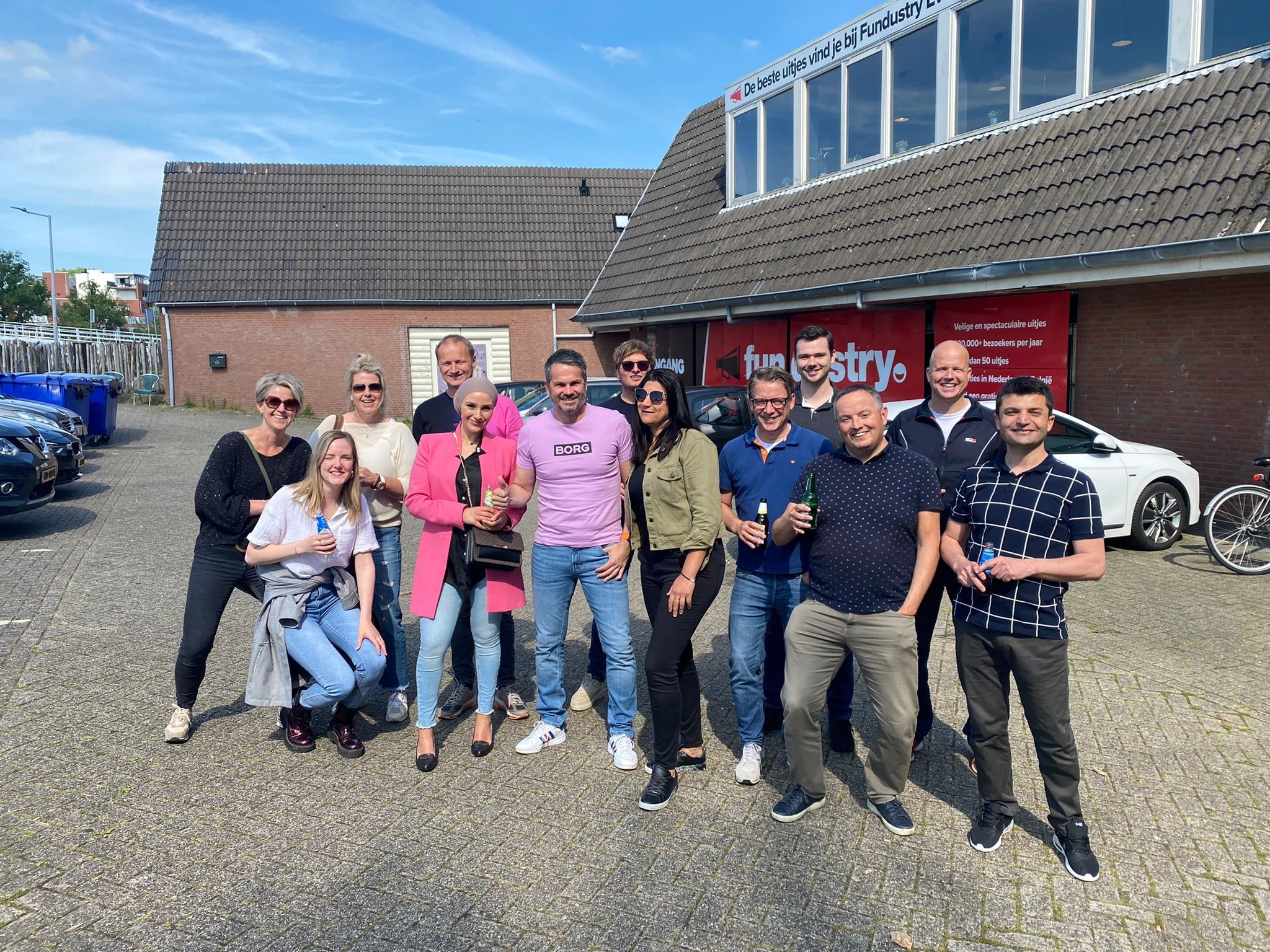
He successfully completed the training program and was transferred to his current team in Rotterdam. Team leader Sjoerd Vooijs paired him with colleague Özlem. "She is also Turkish, so we could help each other if there was a language problem. At least, that was the idea, but in practice we never spoke Turkish to each other. She did help me a lot with understanding all kinds of files and systems. I also got a lot of support from Sjoerd and my immediate colleagues. That team is really great."
A second chance
Serdar approves of Rabobank's policy. “I think it is great that the bank encourages diversity and actually has a department for it. I have also attended Rabo Kleurrijk (t/n: ”Rabo Colorful") events already. And through colleagues I got a 'language buddy'. When I told Sjoerd one day that a friend of mine, also from a foreign background, was looking for a job and had asked if I could be a reference, he advised me to talk to Stijn about it. Through him and a colleague at HR, Gülsah Bas, I learned about the Refugee Talent Hub and the way Rabobank helps status holders. That friend later trained as a KYC analyst with a group of eleven new colleagues acquired through the Refugee Talent Hub and is now also working at the bank. As an employee, I am very proud that the bank gives everyone such equal opportunities, even if your background does not immediately fit a position."
After a long period of sadness and uncertainty, life is luckily looking brighter again for Serdar. He has been reunited with his wife and children, has made new friends and gets along well with his colleagues. He is immensely grateful to everyone he has met on his journey and who has helped him. "I work hard and always try to overcome problems," he says, "but I have also had a lot of support from the people around me. That made it easier to get used to new situations." Whether he ever wants to return to Turkey? At least not in in the foreseeable future. "The Netherlands gave me a second chance and now I want to make the most of it here. For myself, my family and society."